
Our Story
Measuring What Psychology Often Misses
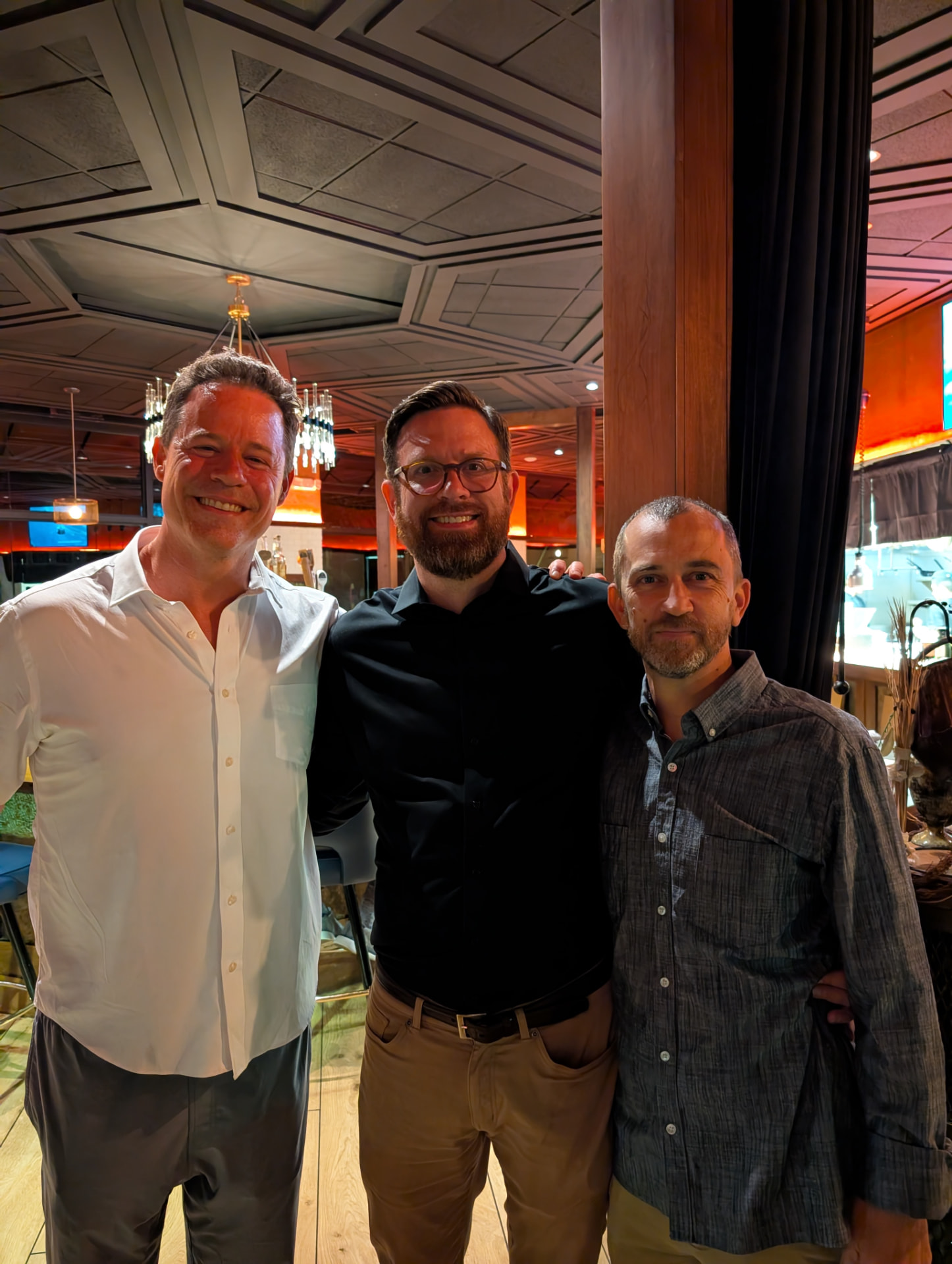
The Wilder Method was created by Bill Wilder, LCMHC, and Matt Burch to answer a question that had followed Bill throughout nearly 20 years of clinical work:
Why can people understand themselves so well and still feel unable to act when change becomes frightening?
Over two decades as a therapist, Bill worked with thoughtful, capable people who could describe their trauma, recognize their patterns, and understand why they felt stuck. Yet insight did not always give them access to the courage, self-trust, boundaries, and inner direction needed to move forward.
Bill recognized the same struggle in his own life.
He began to suspect that psychology was exceptionally good at measuring thoughts, emotions, symptoms, behaviors, and personality, but often lacked a practical language for an essential part of human functioning: the instinctual system that determines what happens in the body when fear, pressure, conflict, and uncertainty become real.
The Summer Everything Changed
The Wilder Method began taking its present form in the summer of 2025.
Bill had reached an impasse in the development of an assessment designed to measure the instinctual capacities he had observed throughout his clinical work. He had spent years developing the ideas, studying the patterns, and attempting to translate them into something practical.
But he had reached the point where he could not take the work any further alone.
Josh Tarbutton, one of the first people to invest in the vision, recognized its potential. Josh supported the early development of the assessment and introduced the project to Matt Burch.
At the time, Matt had been on a seven-year sabbatical from clinical work. After years in the mental-health field, he had experienced the exhaustion and limitations that can come from trying to help people through traditional therapeutic approaches.
Matt understood what it meant to care deeply about healing while questioning whether the available tools were always enough.
Before that sabbatical, Matt had spent nearly 15 years as an intake coordinator at a residential facility. That role gave him a front-row view of how people enter care, what they are hoping to change, and where the system often fails to address the deeper issue. He developed a real gift for seeing how different theories, modalities, and frameworks actually apply to a real person sitting in front of him.
Matt specializes in anxiety, couples, and family systems, and he carries a genuine passion for walking alongside people as they make sense of their lives.
When Bill and Matt met, they discovered that they were approaching the same problem from different directions.
Bill had spent nearly 20 years observing why highly self-aware people remained stuck.
Matt had stepped away from clinical work after confronting his own burnout with traditional therapy, yet he remained uniquely skilled at bringing together complex systems and theories in ways that made them useful.
Together, they decided to take a year away from practicing in order to build something different. Bill brought the clinical observations; Matt brought the ability to synthesize ideas from multiple fields and shape them into a coherent system. Their goal was to create an assessment that would more clearly and helpfully help people get to the root of their issues.
They committed themselves to creating practical tools for people who had reached an impasse with traditional approaches and needed a clearer, more focused path forward.
From Clinical Observation to a Measurable Framework
Bill’s early research and clinical observations became the foundation of the Wilder Method.
Bill and Matt then spent a year studying and synthesizing psychological theories, personality frameworks, neuroscience, evolutionary perspectives, and models of human development.
They were trying to answer several difficult questions:
- Could the different parts of the psyche be described in a way that ordinary people could understand?
- Could the instinctual system be measured without reducing a person to a diagnosis or fixed personality type?
- Could an assessment identify the specific capacities keeping someone from moving toward a meaningful goal?
- Could people use the results before and after a period of focused work to see what had actually changed?
Their goal was not to create another personality quiz.
Their goal was to build a practical map for people who were tired of swimming through endless explanations without knowing where to focus.
Their work produced two complementary personal-growth inventories.
The Instinctual Drive Inventory
This inventory examines how much access a person has to six capacities involved in action under pressure:
- Risk tolerance
- Self-trust
- Standing your ground
- Being fully yourself
- Following what makes you feel alive
- Freedom from excessive self-consciousness
The 6 Sides of You Inventory
This inventory maps six essential sides of human functioning:
- The Adventurer
- The Life Enthusiast
- The Leader
- The Mediator
- The Conscientious One
- The Connector
Together, the two readouts help people see where their ability to act becomes disrupted, how the larger parts of their personality interact, and where focused growth may create the greatest movement.
Bill and Matt also developed articles, visual tools, and workbooks that help people understand their results and translate insight into meaningful action.
Created for People Who Have Reached an Impasse
The Wilder Method was created for people who have already tried to understand themselves.
They may have read the books, listened to the podcasts, attended therapy, processed their past, and learned the language of healing.
Yet something still has not moved.
They know what they need to do, but they cannot make themselves do it.
They understand why they are afraid, but that understanding does not give them courage.
They recognize the pattern, but continue repeating it.
Bill and Matt wanted to create tools specifically for this person.
The purpose is not to reject therapy, medicine, trauma treatment, or other established approaches. Each can be enormously valuable.
The Wilder Method was created to carve out a particular niche within the larger world of personal growth and mental health: helping people who possess insight but need greater access to the instinctual capacities required for action.
A Different Language for What Happens Inside Us
When the body shuts down, the mind freezes, or fear takes control, people often blame themselves.
They may believe they are weak, broken, lazy, unmotivated, or incapable of change.
They may begin searching endlessly for another diagnosis, another traumatic memory, or another explanation for why they cannot move.
Medical and trauma-informed approaches can provide important understanding. The Wilder Method adds another lens by considering the long evolutionary history behind many emotional, instinctual, and bodily responses.
Your nervous system is not necessarily betraying you.
It may be using an ancient protective response that once helped human beings survive but is now activating in a situation that requires a different capacity.
The Wilder Method gives people language for recognizing that response without turning it into a permanent identity.
Instead of asking:
“What is wrong with me?”
The person can begin asking:
- “What part of me is responding right now?”
- “What is it trying to protect?”
- “What capacity do I need access to in this moment?”
- “What would help me take the next step?”
A Map Rooted in the Hero’s Journey
The Wilder Method uses the hero’s journey because meaningful change rarely happens in a straight line.
Every person has a Castle, something meaningful they want to reach.
Every person has a Barn, the familiar patterns that feel safe but keep them circling the same ground.
Every person has a Cave, the conversation, decision, risk, boundary, or truth they must face to move forward.
The Cave is not evidence that you are broken.
It is the place where a necessary part of you is waiting to become stronger.
The Wilder Method is built on the belief that people possess more inner resources than they realize. There is a heroic capacity within each person that can be remembered, activated, and strengthened.
When people gain access to that part of themselves, they can often face challenges and make changes they once believed were impossible.
Not a Diagnosis. A Personal-Growth Inventory.
The Wilder Method inventories are not designed to place people into permanent personality categories or diagnose mental-health conditions.
They are designed to provide a tangible map.
The first assessment establishes a baseline. It identifies the capacities that are already strong, the areas that become less accessible under pressure, and the patterns most connected to the person’s current impasse.
After six to eight weeks of focused growth, the assessment can be repeated. The two sets of results can then be compared to help the person recognize movement, evaluate what has changed, and identify what may need attention next.
The purpose is simple:
- To help people stop swimming in circles.
- To help them stop blaming themselves for protective responses they do not yet understand.
- To help them focus their limited time and energy on the capacities that matter most.
- To give them a practical map for moving toward their dreams, goals, and next chapter.
What began with Bill’s clinical observations, reached a turning point through Josh’s early belief and investment, and became a working system through Bill and Matt’s year of collaboration.
Their shared vision is to offer a new language for personal growth, one that honors the intelligence of the nervous system while helping people discover the courage and resources already within them.
You are not taking a test to discover what is wrong with you.
You are receiving a map showing what is strong, what needs nourishment, and where your journey may need to take you next.